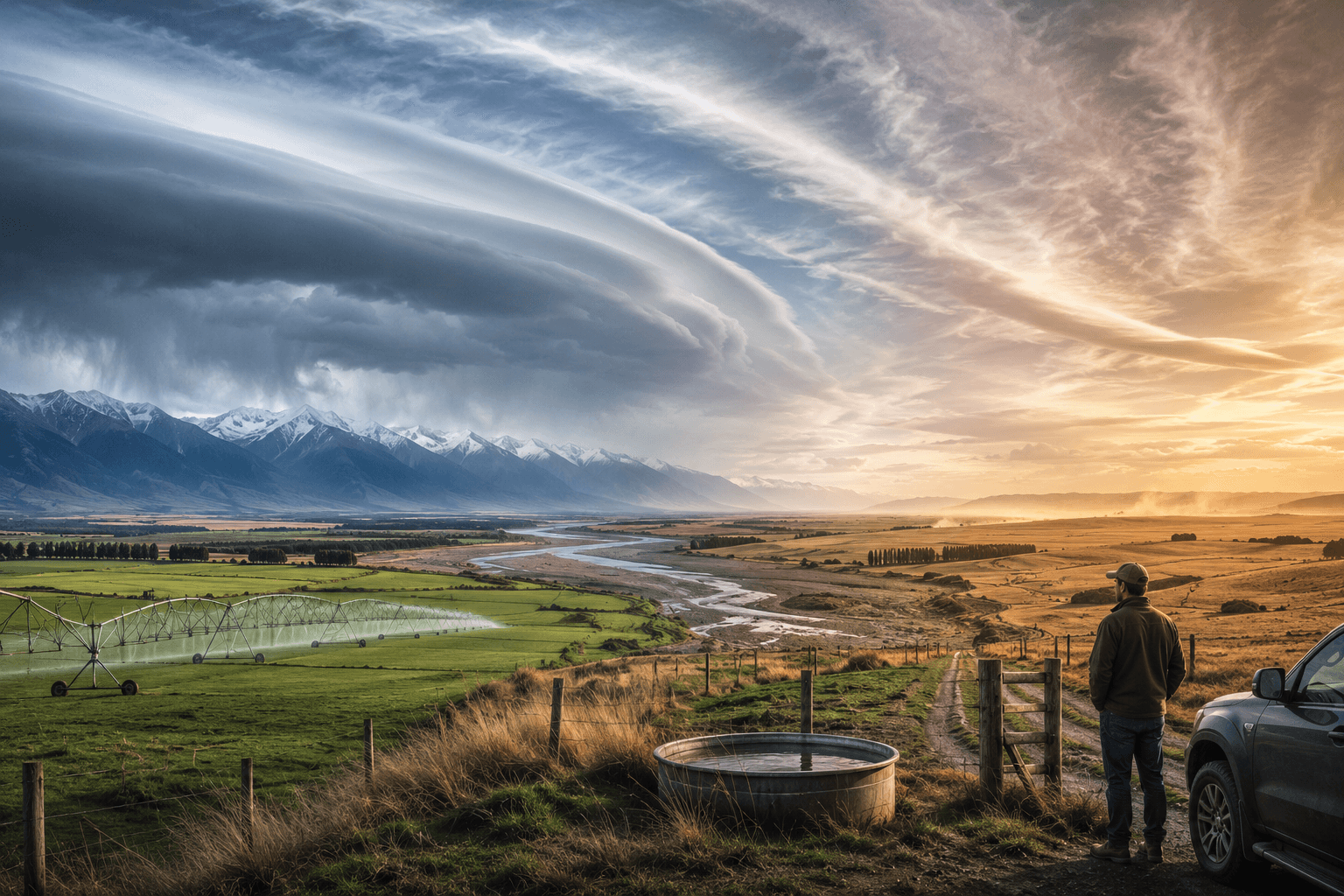
Preparing for El Niño 2026-27
THE WINDY EL NINO - a strategic outlook report for New Zealand farmers, growers, and rural business
Final edition - mid October- out NOW
The October model runs have escalated the picture. This El Niño is now tracking to be the strongest Pacific Ocean event in at least 150 years — into the territory of the extreme 1877-78 event. But New Zealand's version of it is not the hot, blocked summer most people expect: it is a windy one, and that changes what preparation actually looks like. The fully revised September edition of Blue Skies' El Niño report is available now.
The world's leading forecast systems, run independently, now agree the Pacific event will peak above every El Niño in the instrumental record. Yet the New Zealand outlook has not escalated by the same amount — and understanding why is worth more to your planning than the headline number. The season the models show is a windy, changeable westerly summer: dry in the east and north, wet on the alps and the West Coast, temperatures near normal. Drought delivered by wind and evaporation, not heat — the 1982/83 template, not a heatwave. The report explains the mechanism, what it changes on your farm, and the month-by-month decisions it forces from September through March.
This is the fifth edition of a report that revises openly as the evidence moves — the October 'final edition' supersedes the September and August updates, and the original May outlook, and shows you exactly what changed and why. Subscribers to the Outlooks will also receive updates via the monthly seasonal outlooks (November to January issue already published).
What's in the report
What has changed since September — stated first. The November lull came early, in October; November is now the month the westerlies return in force, and the month to act in.
The season in five phases, November to April, from the nine international forecast models run at the start of October — including the South Island summer temperature question, now decided by the ranges.
What history says. Reasoned month-by-month comparisons with 1877/78, 1982/83, 1997/98 and 2015/16 — what each did to New Zealand farming, which one this season most resembles, and what the farmers who came through them well did differently.
All thirteen regions, each with a month-by-month table, the pattern, what has changed, spring and summer decision points, and the single trigger to watch — plus a separate Fiordland hydro outlook.
Sector guidance for dairy, sheep and beef, arable, horticulture, viticulture, forestry and others, with the costs now quantified.
The national decision calendar, the marker points that should make you change plan, and a one-page check for telling a real mid-summer break from a false one.
Three scenarios with honest weights, and a full list of official and industry resources, every one verified in October.
50+ pages, PDF. Plain-language operational framing throughout. Written for rural decision-makers, not meteorologists.
Two ways to get the report
Blue Skies Outlook subscription — $395 per year The full El Niño 2026-27 report, plus twelve months of monthly seasonal outlooks, weekly six-week updates, the latest 2026 El Niño updates, and direct email access for sector- or catchment-specific questions. Best value for anyone operating in a climate-sensitive sector through the 2026-27 season.
Subscribe at bswx.substack.com
Standalone report — $19.95 one-off The full El Niño 2026-27 preparedness report (October final edition) only, as a PDF download. Best for one-off readers who want the latest 2026 picture without committing to a subscription.
Buy the report HERE